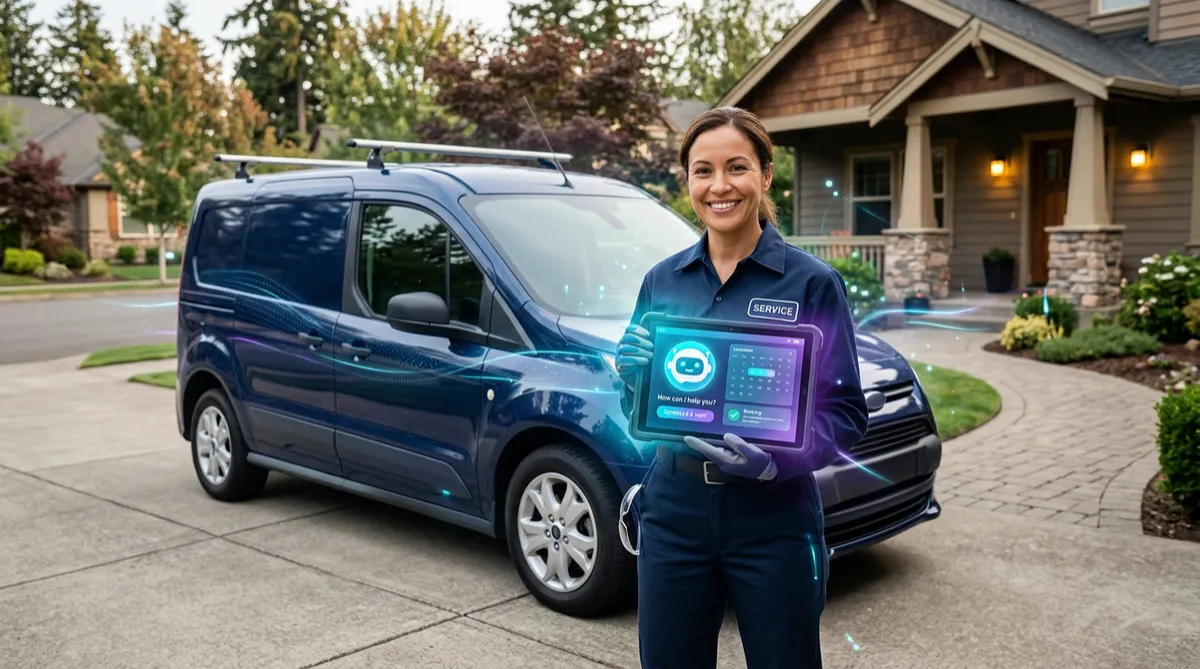
Stop Losing the First Call: A Practical AI Playbook for Home Service Businesses
A missed call can mean a missed job. For a plumbing, HVAC, electrical, roofing, cleaning, or landscaping company, that call may come while a technician is on a ladder, a crew is driving, or the office is helping another customer. AI can help cover those gaps—not by replacing the personal service people value, but by making sure the next step is easier and faster.

Think of AI as a practical assistant for the moments when your team is busy: answering common questions, capturing the details of a request, helping customers book, and keeping follow-up from slipping through the cracks. Here’s a grounded way to put it to work.
1. Give every inquiry a reliable first response
Homeowners often reach out when something needs attention now. A conversational AI receptionist can respond to calls or messages when your staff is tied up, gather a name and callback number, and ask what kind of help is needed. An HVAC customer might describe a system that stopped cooling; a roofer might hear about a leak after a storm. The goal is not to diagnose the problem remotely. It is to capture enough context for a person to take over.
Set clear boundaries. Tell the assistant which services you offer, the areas you cover, your business hours, and what to do with urgent or safety-related concerns. For anything outside its guidance, it should collect contact details and route the conversation to your team—not improvise.
- List the services and neighborhoods you actually serve.
- Use a short set of intake questions, such as service needed, address or ZIP code, and preferred callback time.
- Define when to transfer, alert a person, or simply take a message.
2. Follow up while the customer is still looking
Speed matters in a practical sense: when a homeowner is comparing options, a clear response helps them understand what happens next. An automated acknowledgement can confirm that a request arrived, set expectations for a callback, and ask for missing details. Your staff can then review the request and provide the real estimate, availability, or advice.
For example, a cleaning company could confirm the home size and preferred service date before a coordinator calls. An electrician could collect the customer’s location and a brief description, while making clear that a qualified professional must assess the work. Keep follow-up useful and modest; repeated nudges or promises the team cannot meet can damage trust.
- Write a brief acknowledgement for each common request type.
- Give a realistic response window, and update it if plans change.
- Make it easy for someone to reach a person or correct the details.
3. Make booking simpler, not more complicated
Once a request is understood, automation can help customers choose an available appointment window or send a booking link that reflects your actual schedule. That can reduce the back-and-forth for routine visits, such as a maintenance appointment or an initial cleaning consultation. For weather-dependent roofing work or jobs that require a technician to review the situation first, use booking as a request—not a guaranteed arrival time.
Connect booking rules to how the business really operates: service areas, job types, travel time, working hours, and the people qualified for each job. Confirm the appointment and send a reminder with practical preparation details. If a visit needs confirmation by staff, say so plainly.
- Separate appointment types that have different durations or requirements.
- Keep travel buffers and team availability current.
- Use reminders to confirm the window, address, and any access instructions.
4. Keep estimates and next steps from going quiet
After a site visit, a customer may need time to consider an estimate. A simple follow-up sequence can remind your team to check in, or send a polite message asking whether the customer has questions. It should refer to the actual job and estimate, avoid pressure, and stop when the customer replies or declines.
AI can also help staff turn rough notes into a clearer draft of a service summary or follow-up message. A person should check every detail before sending—especially scope, price, timing, warranty language, and safety guidance. The tool can help organize communication; it should not decide what a job costs or commit your crew to work that has not been approved.
- Choose one or two appropriate follow-up moments rather than messaging indefinitely.
- Review drafts for accuracy, tone, and the customer's specific situation.
- Record the outcome so another team member can pick up the conversation.
5. Ask for feedback at the right moment
After a completed job, an automated message can thank the customer and invite honest feedback. A cleaning team might ask after a scheduled visit; a landscaper might follow up after a project milestone or final walkthrough. Keep the request neutral and make it simple to share concerns directly with your business. If a customer raises an issue, route it to a person who can respond thoughtfully.
Start small. Choose one service line and one point in the customer journey, then watch where handoffs feel smoother and where people still need a human conversation. Review a sample of interactions with your team, update confusing answers, and pause any automation that creates extra work or an uncomfortable experience.
- Ask for feedback only after the service milestone you define.
- Use a consistent, respectful message for every customer.
- Give staff a clear path to respond when feedback needs attention.
AI works best as a steady helper behind good service: it can catch a request, organize the next step, and remind your team to follow through. Start with one bottleneck—missed calls, slow replies, appointment coordination, or post-job feedback—and make the process feel natural before expanding it. If you’re exploring where a practical first step could fit in your home service business, DreamVista Group can help you think it through.
